19th of March 2026 – Cobogó Golubov + UNB Auditorium
I set up a google alert for ‘Golubov’ a few years ago and mostly it’s news about Russian scientists/Macedonian footballer – but today I got a little gem about my father.
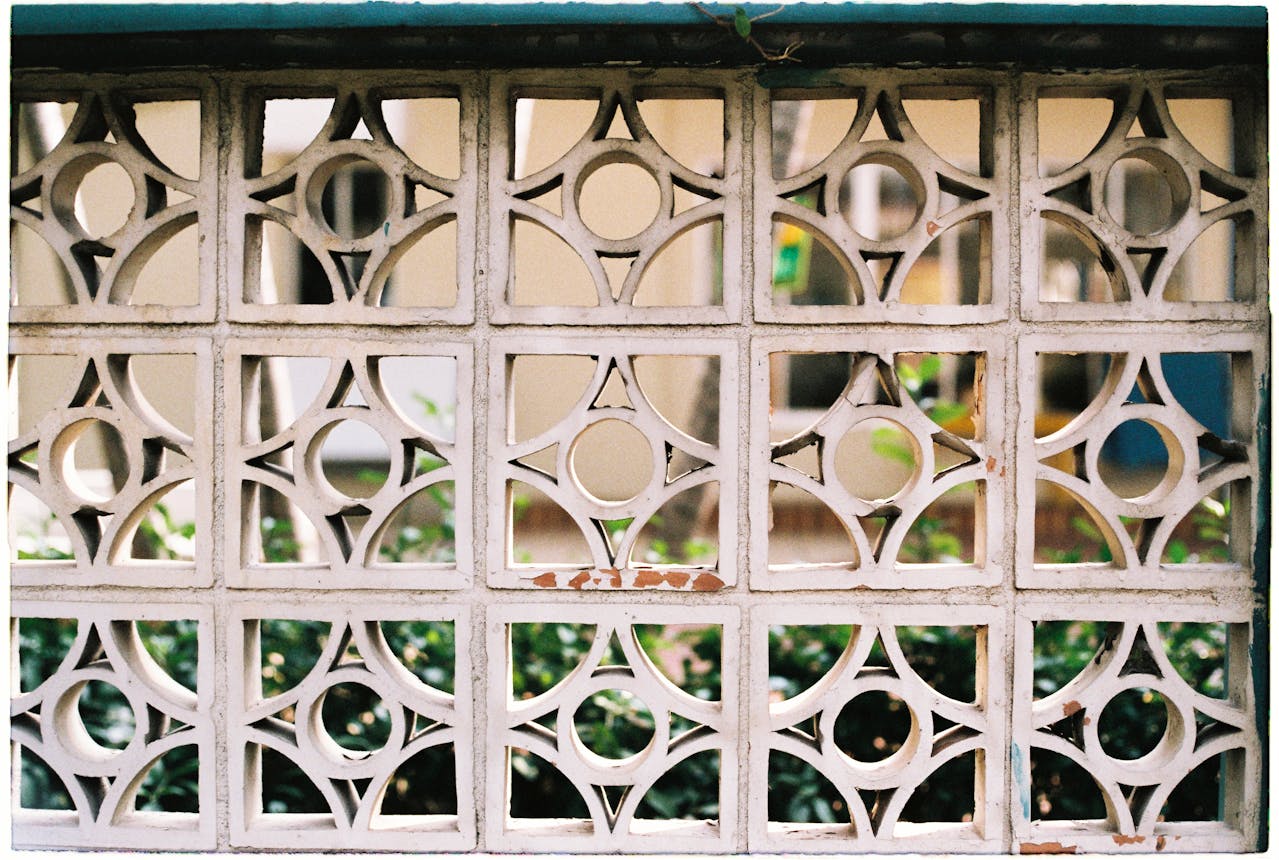
I’d know for a while that a cobogó named Golubov, was named after my father. Cobogó is basically an open brick used extensively in Brazilian architecture – it allows for air to circulate and adds a nice character to buildings. A breeze block.
A cobogó is a hollow, decorative architectural block originating in Brazil in the 1920s. The name comes from the initials of its three inventors: Coimbra, Boeckmann, and Góes.
The blocks are designed with open geometric patterns that allow air and light to pass through while still providing privacy and shade — essentially functioning as a screen or lattice wall. They’re made from various materials including ceramic, concrete, and wood.
They became a signature element of Brazilian modernist architecture and are still widely used today, both for practical reasons (natural ventilation in hot climates) and purely aesthetic ones. You’ll see them used as exterior façades, interior partitions, and garden walls.
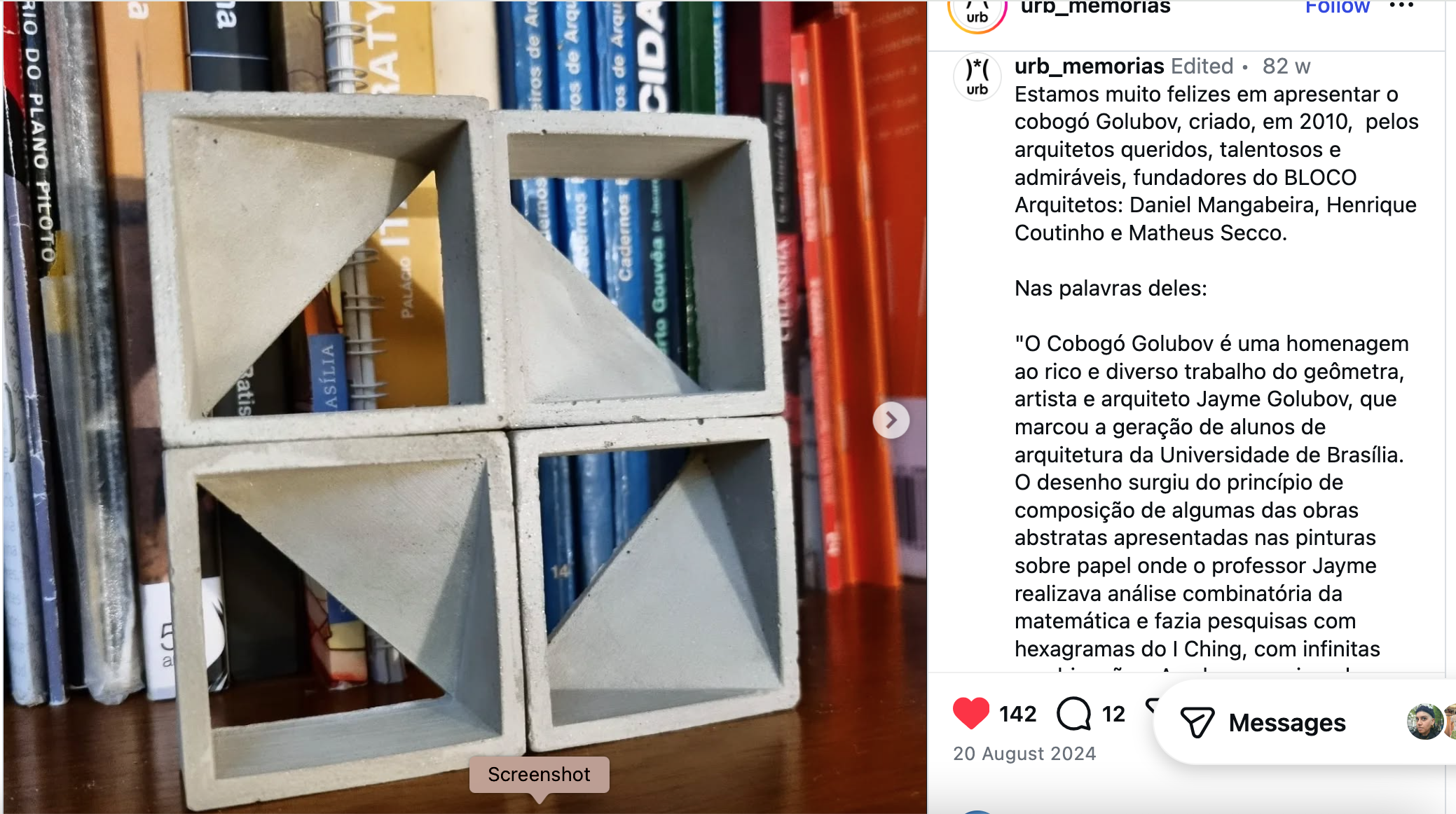
Today the Google alert had this as one of the results: an Instagram post talking about Cobogó Golubov specifically and giving me some info I didn’t know, i.e. who created this model of cobogó and when…
Estamos muito felizes em apresentar o cobogó Golubov, criado, em 2010, pelos arquitetos queridos, talentosos e admiráveis, fundadores do BLOCO Arquitetos: Daniel Mangabeira, Henrique Coutinho e Matheus Secco.
Nas palavras deles: “O Cobogó Golubov é uma homenagem ao rico e diverso trabalho do geômetra, artista e arquiteto Jayme Golubov, que marcou a geração de alunos de arquitetura da Universidade de Brasília.
O desenho surgiu do princípio de composição de algumas das obras abstratas apresentadas nas pinturas sobre papel onde o professor Jayme realizava análise combinatória da matemática e fazia pesquisas com hexagramas do I Ching, com infinitas combinações. As obras surgiam de triângulos, onde composições previamente estudadas criavam linguagens, símbolos e mensagens. A ideia foi proporcionar ao arquiteto (que escolher esse cobogó para aplicar em seu projeto) o uso de um elemento marcante da arquitetura brasileira que propiciasse princípios de combinação aleatória ou pré-determinada, e possibilitasse ao profissional ou ao assentador criar uma rica composição geométrica.”
Translation: We are very happy to present the Golubov cobogó, created in 2010 by the beloved, talented and admirable architects, founders of BLOCO Arquitetos: Daniel Mangabeira, Henrique Coutinho and Matheus Secco.
In their words:
“The Golubov Cobogó is a tribute to the rich and diverse work of the geometer, artist and architect Jayme Golubov, who left his mark on a generation of architecture students at the University of Brasília.
The design emerged from the compositional principles found in some of the abstract works presented in his paintings on paper, where Professor Jayme carried out combinatorial mathematical analysis and conducted research with I Ching hexagrams, exploring infinite combinations. The works arose from triangles, where previously studied compositions created languages, symbols and messages. The idea was to offer the architect (who chooses this cobogó for their project) the use of a striking element of Brazilian architecture that would allow for principles of random or pre-determined combination, enabling the professional or the installer to create a rich geometric composition.” See Goluboviedros for more info
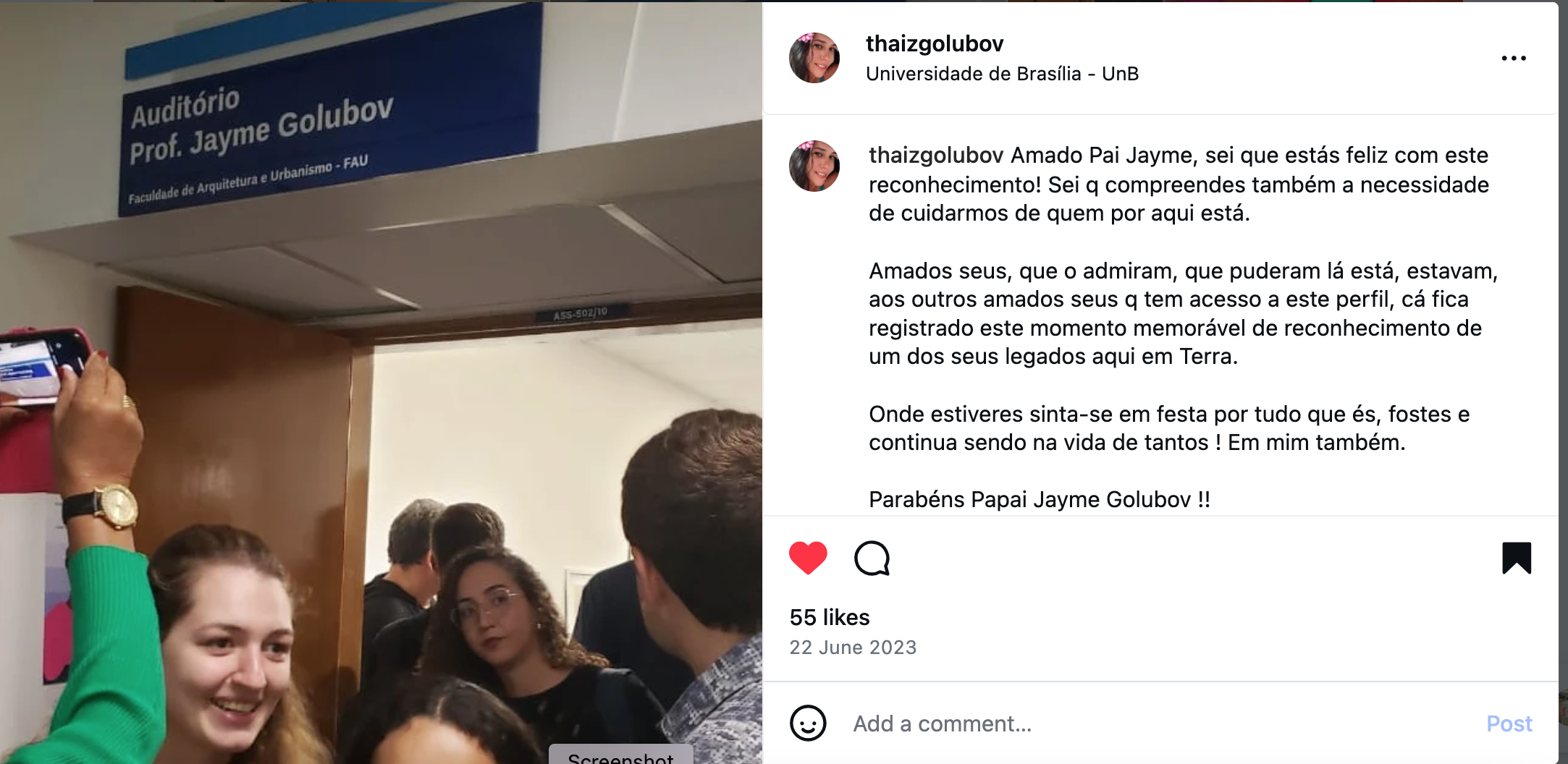
While I’m here, back in 2023, an auditorium at the University of Brasília (UNB) was inaugurated and named after Jayme, who was a lecturer/Professor at UNB. Pretty cool!
Translation: Beloved Father Jayme, I know you are happy with this recognition! I know you also understand the need for us to take care of those who are still here. Your beloved ones, who admire you, those who were able to be there, were there — and to the other beloved ones of yours who have access to this profile, here this memorable moment is recorded: the recognition of one of your legacies here on Earth. Wherever you are, feel celebrated for everything you are, were, and continue to be in the lives of so many — and in mine as well. Congratulations, Daddy Jayme Golubov!! How beautiful, Dad!!! I know that by writing here, you can feel, wherever you are, my heart ❤️. Gratitude to Uncle Paulinho for the records and your presence!!! The Professor Jayme Golubov Auditorium at the School of Architecture and Urbanism of the University of Brasília
Jayme Kerbel Golubov was born in Rio de Janeiro in 1940 and was known simply by his surname Golubov, or “Goluba” (? not sure)to friends. He was a geometer, artist, architect and professor at the Faculty of Architecture and Urbanism (FAU) of the University of Brasília. He taught until 1996, when he passed away in Brasília. He had three children: Leticia, Arthur, and Thaiz.
Teaching
He was a professor of Descriptive Geometry, was highly creative, and began inventing volumes based on geometric laws and theories, which proved very successful. His classes were a challenge for new students, as they tackled complex problems such as the intersection of geometric solids, and provided foundational skills for a range of professions including graphic designers, artists, and architects. Due to his expertise in the field, he became a national reference.
Artistic work and legacy
Golubov left a legacy of significant works recognised to this day, including published books, sculptures, tile panels created according to the principles of abstract and combinatorial art on a geometric basis — particularly around the idea of play — drawings, prints, exhibitions, and architectural works.
At the UnB rectory building, his wooden (not sure it’s wooden, thought it was bronze/metal, can’t find info) work Olho o verde vejo o azul (1997) is on display. He is also the author of the tile mural installed in 1998 at the UnB Ecological Station.
The Cobogó Golubov
Created in 2010 by the founders of BLOCO Arquitetos as a tribute to him, the cobogó’s design was inspired by his abstract paper paintings in which he performed combinatorial mathematical analysis and researched I Ching hexagrams. The compositions arose from triangles that created languages, symbols and messages.
Documentary film
A documentary film titled Goluboviedros was made as a visit to the spaces and thoughts of Jayme Kerbel Golubov, described as a professor, architect, geometer, visual artist, and above all a “magician” capable of transforming geometry into art and art into teaching. It was directed by Marcelo Díaz with cinematography by Juliano Serra, produced in association with UnB.
Academic research
His life and work was the subject of a master’s dissertation at FAU/UnB by Ana Paula Navarro, titled O Artista, Geômetra e Professor Jayme Kerbel Golubov: Inventário de Bens Móveis e Integrados, completed in 2021.
The Auditorium
The name Auditório Jayme Golubov was formally approved by the FAU Council on January 27, 2023. To honour him, Professor Rosana designed a sound-absorption panel for the auditorium featuring motifs from his works, with reproductions donated by former students and colleagues. The auditorium was inaugurated on June 21, 2023, during the swearing-in ceremony of the new FAU leadership — the first time such a ceremony was held within the Faculty’s own building.