Sunday 2nd of March 2014 – Goluboviedros
These are geometric shapes created by my deceased father, the Professor and architect Jayme Kerbel Golubov. He talks about them in this video: ‘Goluboviedros‘
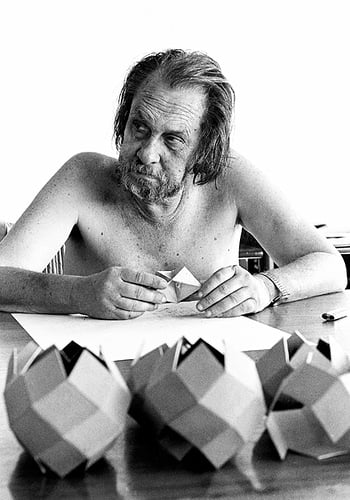
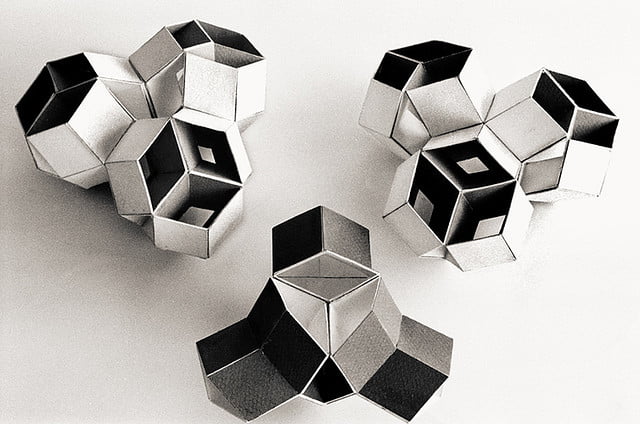
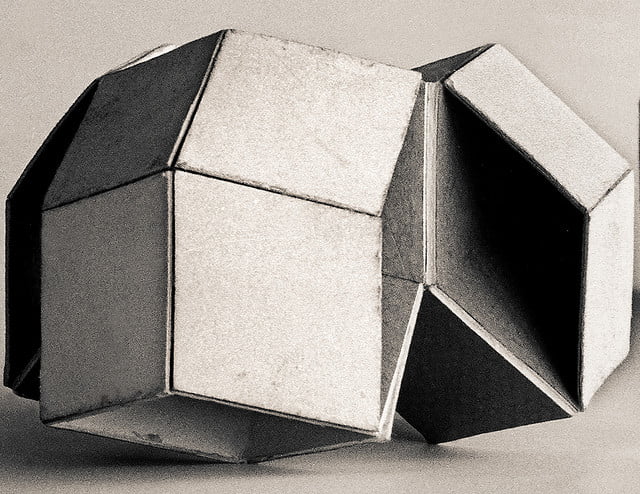
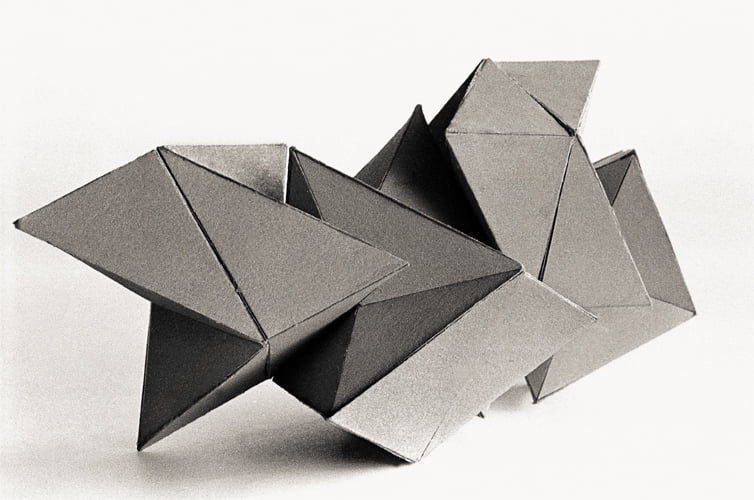
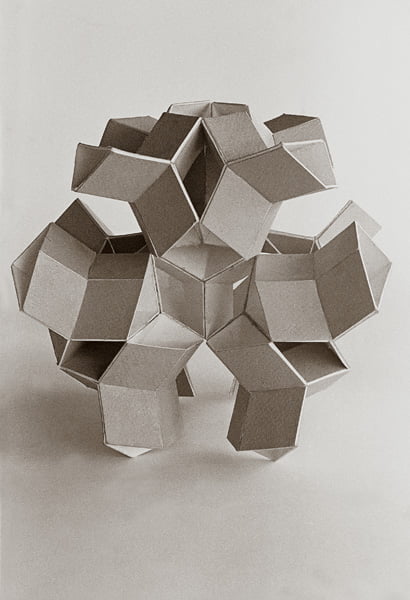
all photos by Marcelo Barbosa
My father, Jaime Kerbel Golubov, died in 1997, sometime in August. I happened to be in Brazil at the time, in Rio (he lived in Brasilia) but never made the trip to Brasilia to see him, I was still angry at him for his continued absence in my life since childhood. My aunt said I should really go and see him but I was young and stubborn. I wish I had, in hindsight.
I did see him before I left to come to England. We had a chat in his car, and I remember his words ‘Lots of Brazilians end up doing horrible jobs in England’, he didn’t think I should come here. I did some low paid jobs: cleaning, waitressing, clothes shop… I’m really glad I did them, I learned quite a lot of from them, and they were actually good jobs. The kind of job a young person could and should do. I certainly got fit from doing them and met nice people. Sitting on a desk for the last 15 years has done my back no favours.
What a cool guy he was: architect, mathematician, professor and artist. His parents were Jewish, or at least his mother was, his family had fled from somewhere in the USSR (I was told Ukraine and also Russia, not sure) possibly during the revolution in 1917 but maybe earlier or later – I don’t know. When I lived with him he was married to a catholic (most people in Brazil were catholics back then) and he had no interest in religion. They settled in Rio de Janeiro, Brazil. So that’s that side of our family and where Golubov (and Kerbel) comes from – I wish I knew more about them.
Unfortunately we had very little contact – I have no memory of meeting my paternal grandparents, although I’m told I did meet them. I learned some bits and bobs when I was contacted by a family solicitor regarding some inheritance from him and from my grandmother Rosa Kerbel Golubov, but still, no one seems to know much. They did own property in Rio, some of it appropriated by Petrobrás, and these cases of compensation for land appropriation are still ongoing, decades on!
The only bio I can find for my father on the internet is this:
The font ANACOM__.TTF, as well as the project itself, was conceived from the extensive work of Prof. Jaime Kerbel Golubov of Universidade de Brasília (UnB). His work in the earlier 90’s with patterns generated from combinatory analysis of basic elements was taken from the most simple geometrical figures (square and triangle) .
The generator principles of his work were also developed by the artist Athos Bulcão, being known internationally as one of the greatest artists of his time. The splendour of his works may be seen in several buildings in Brasília, in the rest of the country and abroad.
The work philosophy had as a starting point certain religious/philosophical/mathematical elements from several cultures: Yin/Yang gave the black/white contrast bipolarity; the images of the square and the triangle deriving from the diagonals based on the principles of Kabbalah; the disposing in great panels perfectly ordered but with random appearance of Chaos Theory and Fractals. The results, originally hand-made by Prof. Golubov, were enormous drawings of intricate patterns which, when, exposed to the public, evoked different emotional reactions. This gave me the idea of studying about the psychological correlation with the algorithms, the rythm and symmetry they made (or the lack of these elements).
Unfortunately, Prof. Golubov died before we could have a deeper talk about these psychological studies and, being one of his students, I decided to carry on these studies of aesthetical experiments. The natural decurrence was the addition of the circular elements in quarter of circles, negative and positives, following the original bipolarity line. The result of this experimental retake was summarised in the font here exposed, to divulge and incite new experiments in Art.
The combinations generated “by feeling” by Athos Bulcão and the ones generated from the algorithms were taken as a base for a more extense work. The objective of this work is not only the ludic aspect of the panel preparing, but also the verification of the Congenital Mathematics (*), which I believe is inherent to all humans.
The algorithms are still under development; some are already available in the program page.
There are also some links to his sculptures, but they’re in Portuguese… He taught at the Universidade de Brasilia (UnB) and had sculptures there, as he was around Brasilia at the time the city was being built. In fact, my mum and him met while they were students (one of the first) at UnB.
Both studied architecture, and he was five years older than her. I hope to go back to Brasilia again soon, it’s an amazing place, I’m so very glad I was born and spent a few very happy years of my childhood in there.
Jayme died young, 57 years years old. He had diabetes, and was a chain smoker. When I lived with him (age 6-7) he got taken to hospital once, as he had mental health issues, but I don’t know what. I never saw anything that stood out when I lived with him. It was also when I lived with them that Arthur Aquino Golubov, my half brother, was born.
Some quotes, about Geometry, from ‘Goluboviedros‘ video.
Eu não sei se você consegue captar
a importância de uma matéria
que transforma o sonho e a fantasia em realidade …
A Geometria parece mulher …
é aquele negócio que você se aproxima
e que é absolutamente incompreensível …
mas que com um pouco da inteligência que o amor dá
você vai ver que não é bem assim …
É como se eu pudesse botar as duas pernas
uma em cada margem de um rio
e através de cada pé sentir as respostas
de cada margem do rio …
O amor é uma forma de inteligência
e contrabalanceado com a paixão
pode te dar uma estrutura harmônica …
Porque o conhecimento é um mergulho …
Entra no mar …
pra ver se a água não te leva todo …
O encantamento é absolutamente necessário …
porque é desse encantamento que vai se gerar a necessidade
do domínio desse universo …
Não há busca do conhecimento sem paixão …
Nunca ninguém buscou o conhecimento de uma coisa pela qual não
estivesse apaixonado …
http://catiagd.blogspot.co.uk/2011/10/jayme-kerbel-golubov.html
Goluboviedros full Transcription
Part 1
Essa emoçāo que me cala, né, que é capaz de me calar
De me fazer entender que nós somos portadores de linguagens muito mais expressivas, sabe?
Muito mais, mais alegres até, sabe?
Dois espaços me seduziram. Dois espaços:
Um era o espaço ocupado pela água quando ela se batia em cima alguma coisa, é o espaço da onda, né?
Aquela onda que se renova.
O outro espaço era o espaço da folha. Da folha das árvores.
Muita sabedoria, né? Uma curva faz assim, a outra faz assim.
Ora, esse espaço era muito rico. E eu podia geometrizar esse espaço.
Eu podia perfeitamente pressentir a existência de algumas leis desse espaço.
É a bolha de sabão, né?
Se passar uma bolha de sabāo e fizer assim vai dar uma curvatura assim e outra assim.
Na superfície de tensão máxima, de area miníma.
Mas ela podia ser triangulada.
E acabei descobrindo, no processo da triangulação dessa superfície de dupla curvatura,(que) poderia ocorrer um triangulo que tinha um angulo de 101 graus 32 minutos e 14 segundos, e que isso eu só conseguia através de processo da geometria.
Isso acabou me gerando um losango. E que depois eu associei esse losango utilizando 3 peças que definiram 4 objetos básicos. Aí eu peguei e colori cada uma dessas composições.
E parti pelo processo de interassociação.
Que é um processo que rege toda a linguística.
Que rege todos nossos comportamentos.
Nossos comportamentos sāo resultados de associações.
Quer seja de idéias, quer seja de gestos, de movimentos. De idéias com gestos, de idéias com movimentos.
Quer dizer, o que a gente faz nāo é senāo associar coisas.
A gente associa coisas e dela resulta uma nova coisa.
Mas nāo existe nada original.
Existe o que você tem disponível.
O mar eu acho que me ensinou tudo o que eu sei.
E o que eu ainda nāo sei eu espero um dia voltar pro mar pra ver.
Por volta dos 14, 15 anos mais ou menos eu comecei a pintar o mar no cotidiano.
Eu todo dia eu levava a prancheta pra praia.
Eu levava lápis de cor e sentava no meio da praia pra desenhar. E eu passei a compreender que eu nunca tinha visto dois dias do mesmo mar.
O mar tem uma individualidade.
Ele tem uma forma de se comportar.
Ele tem um dia que ele te aceita muito bem, né?
Tem outro dia que ele te repele.
Ele nāo deixa você entrar dentro dele, né?Eu fui me acostumando, né, passou a ser uma necessidade, como comer, né?
Como respirar.
O desenho passou a ser uma necessidade pra mim.
Era umas 4 horas por dia de trabalho.
Isso me parece pra um garoto de 14 anos anos se dedicar à uma tarefa com essa perseverança, com essa tenacidade, com essa disciplina, pode denunciar alguma coisa que seria o meu caminho pro resto da minha vida.
Eu pressinto hoje, pode parecer absurdo, mas que naquele momento já estava delineado o meu caminho.
Part 2
Quer fazendo geometria, quer fazendo matemática, algebra, trigonometria.
O desenho das coisas que eu via.
O desenho das coisas que eu imaginava.
Aí avaliei que eu tinha que chegar em casa com a notícia.
Olha, já meio com medo de levar uma porrada.
Eu vou apanhar nessa história aqui.
Mas, cheguei, falei: ‘O negócio é o seguinte: Os caras estāo achando lá que eu nāo dou muito bem pra essa tal de ser engenheiro e coisa e tal. Eu vou fazer Belas Artes.’
Ai zum zum zum, corre daqui, corre dali
Eles (minha família) falando:
-‘Nāo, o cara quer ser artista’
-‘Entāo vamos fazer um acordo: você vai fazer arquitetura.’
Depois me fiz arquiteto, me fiz desenhista profissional antes de arquiteto.
Fiz tudo na vida, tudo aquilo que eu achava que era importante.
Escrevi.
Esculpi.
Desenhei.
Briguei.
Fui empurrado.
Levei porrada.
Me fiz geômetra.
E hoje o que eu sou é geômetra.
Ela (Geometria) trouxe a percepçāo da magia da vida.
Muito mais do que um encanto.
Ela me dá a possibilidade de eu fazer passagem do conhecimento pro sentimento sem que hajam saltos.
A geometria tem a competência de fazer viável qualquer coisa que você pensa.
Eu nāo sei se você consegue captar a importāncia de uma matéria que transforma o sonho, a fantasia em realidade.
Parece mulher. Geometria parece mulher.
Tem muito a ver com a mulher.
Quer dizer, é aquele negócio que você se aproxima e que é absolutamente incompreensível.
Mas que com um pouco da inteligência que o amor dá você vai vendo, nāo é bem assim. (nāo é incompreensível)
É como se eu pudesse botar as duas pernas, uma em cada margin de um rio.
E através de cada pé sentir as respostas de cada margin do rio.
Eu entendo que o amor é uma forma de inteligência.
Que quando está balanceado com a paixão podem te dar uma estrutura harmônica.
Que o conhecimento é um mergulho.
Entra no mar pra ver se a água nāo te envolve todo.
Quando você faz esse mergulho é lá no fundo que se coisas se fundem.
Nāo há a menor distinçāo entre a arte e esse lance, é uma coisa só.
Esse encantamento é absolutamente necessário.
Porquê é desse encantamento que vai se gerar a necessidade do domínio desse universo.
Não há busca de conhecimento sem paixāo. Nāo há.
Nunca ninguém buscou o conhecimento em torno de uma coisa pela qual nāo tivesse apaixonado.
E é por isso que você busca o conhecimento.
Você precisa dele.
E eu passei a minha vida toda colecionando esses valores todos pra ver se eu me aproximava de alguma resposta.
E a resposta que eu trago é a tentativa que eu fiz.
Se eu logrei ou não, êxito, não estou interessado de saber.
Eu só estou interessado em saber se convocado, se escolhido, eu nāo me esquivei.
Eu nāo me esquivei da decepçāo.
Nāo me esquivei do erro.
Nāo me esquivei do acerto.
Nāo me esquivei da raiva.
Nāo me esquivei do ódio.
Não me esquivei do amor.
Meu nome é Jayme Kerbel Golubov.
Golubov significa ‘Filho de pombo’
E pombo é aquele que não se aprisiona.
I made backup copies of these videos, just in case:
Goluboviedros Pt. 1 : https://www.youtube.com/watch?v=A-XLr3ruHyQ
Goluboviedros Pt. 2: https://www.youtube.com/watch?v=6RFcnlH77vw
Originals were found here:
https://www.youtube.com/watch?v=HHS1q3yS3ec
https://www.youtube.com/watch?v=aw6-lsq8Jso
Jayme Kerbel Golubov’s family tree on Geni
Skip to the future and read about Cobogó Golubov and an auditorium named after Jayme Golubov